Summary
The Coalition for Just Reparations (C4JR) in Iraq launched a campaign to improve how the Yazidi Women Survivors Law is carried out and to help survivors receive the rights and compensation promised in the law. The coalition worked with survivors, civil society groups, and government officials to address barriers that stopped survivors from applying for reparations. Through awareness activities, research, survivor guidance, and meetings with government institutions, the campaign helped increase the number of survivors applying for compensation from 1,100 to 1,700 within about one year of coordinated coalition efforts. More recently, since the law began to be implemented, over 2,200 survivors have started receiving monthly compensation.
This campaign was strengthened through collaboration with New Tactics in Human Rights, which supported the coalition through training and mentoring sessions to develop and refine their advocacy strategy.
Problem this Tactic Addresses
After the 2014 genocide carried out by ISIS against the Yazidi community, Iraq passed the Yazidi Women Survivors Law. The law promises financial compensation, rehabilitation and other support for survivors. However, the law has not always been implemented well, which has made it difficult for many survivors to realize their rights.
Many survivors did not know how to apply for compensation. Others faced complicated procedures or lacked the documents needed to complete their applications. Some also did not have access to legal support. Because of these barriers, many survivors were unable to apply for reparations or receive the benefits promised by the law.
The Tactic
C4JR used a coordinated advocacy approach that combined survivor support, research, public awareness and engagement with decision-makers.
Early on, the coalition identified a major gap: most efforts focused on criminal justice, while survivors’ access to reparations was limited. In 2019, when a draft law was introduced in parliament, the coalition recognized a window of opportunity to influence the process and focused its efforts on strengthening the law and its implementation.
The coalition was built through consultations with civil society organizations across Iraq, including meetings, surveys, and joint discussions to agree on shared priorities and a unified advocacy position
Survivors were actively involved in the campaign, sharing their experiences and helping shape advocacy messages. The coalition’s strategy was guided by three main goals:
- Intervention goal: Increase the number of survivors applying for compensation and ensure they are officially recognized.
- Restorative goal: Support survivors to access compensation and essential services, including financial, health and social support.
- Promotion goal: Communicate the challenges and barriers survivors face in accessing their rights and benefits under the Survivors Law.
How the Tactic Works
- Commemorating memory and public spaces
As part of its advocacy efforts, the coalition supported initiatives that honor survivors and preserve collective memory. A public park known as the Survivors’ Garden was established in Sinjar by Nadia’s Initiative, with land provided by the local municipality. The space reflects strength, resilience, and the courage of Yazidi women survivors, while also serving as a place for community recognition and healing.
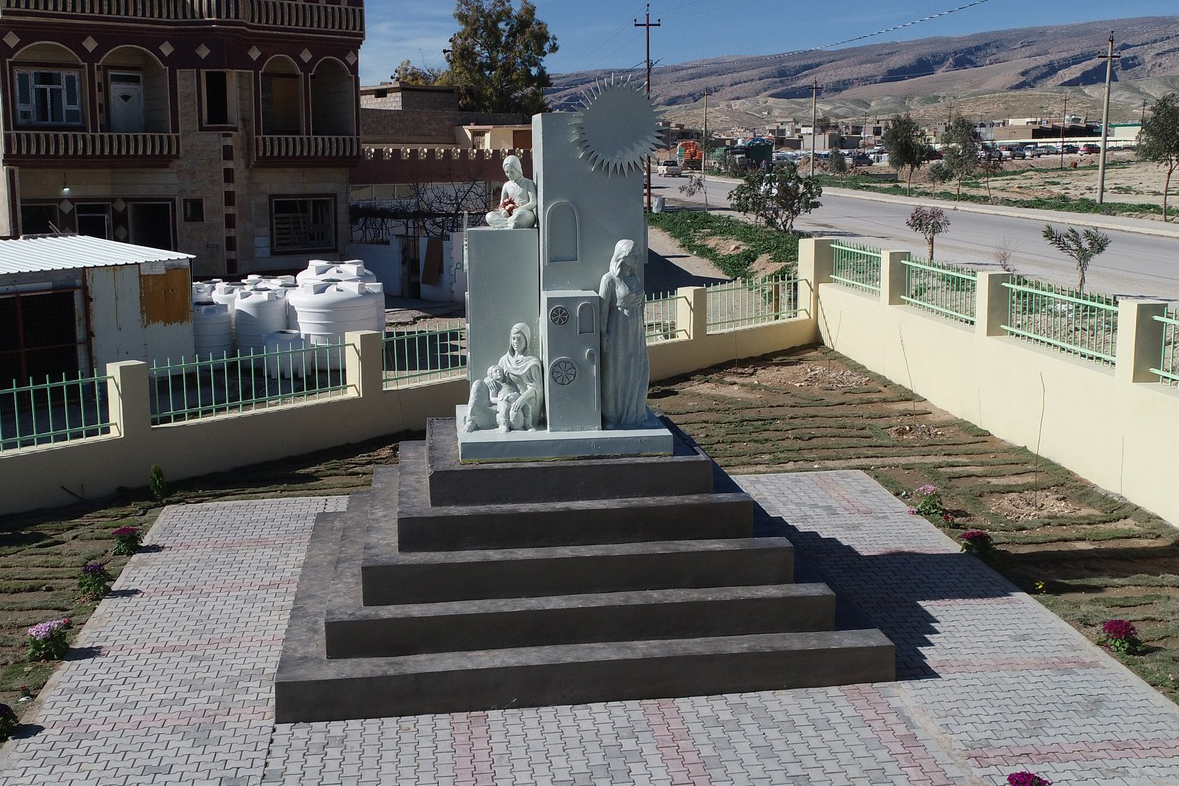
Through the coalition, Nadia’s Initiative shared its experience in developing the memorial, helping other members understand how similar initiatives can support advocacy and survivor recognition.
- Supporting survivors during the application process
Organizations within the coalition provided legal services, consultations and practical support to help survivors complete and submit their compensation applications.
- Raising awareness among survivors
Survivors who had already received compensation helped guide others through the application process. The coalition also created simple materials that explain survivors’ rights and the steps required to apply.
- Collecting research and evidence
The coalition conducted surveys and interviews with survivors and organizations to understand the barriers in the application process. The survey collected more than 250 responses from survivors and helped identify key challenges.
The coalition organized meetings with government institutions responsible for implementing the Survivors Law. These discussions focused on improving coordination and addressing administrative barriers.
The coalition’s Advocacy Working Group also organized planning meetings, including an in-person session with 18 participants from three organizations. These discussions helped shape a shared campaign strategy and led to coordinated actions, including events to mark International Genocide Day.
- Using media and public outreach
The coalition organized press conferences, podcasts and public discussions to highlight the challenges survivors face and to raise awareness about their rights.
Why the Tactic is Effective
This tactic works because it addresses both personal and institutional barriers that prevent survivors from accessing reparations. Direct support helps survivors complete their applications, while research and advocacy encourage institutions to improve how the law is implemented. When survivors help guide others, it also builds trust in the process and encourages more survivors to apply.
Resources
Learn more about the work of Yazidi survivors on this episode of our Human Rights Chat podcast or in this tactic that pays tribute to survivors.